Saturday, 29 October 2011

Clergy Colloquium


Mgr Wadsworth was not the only Mgr - nor the only Liturgist - at the Colloquium

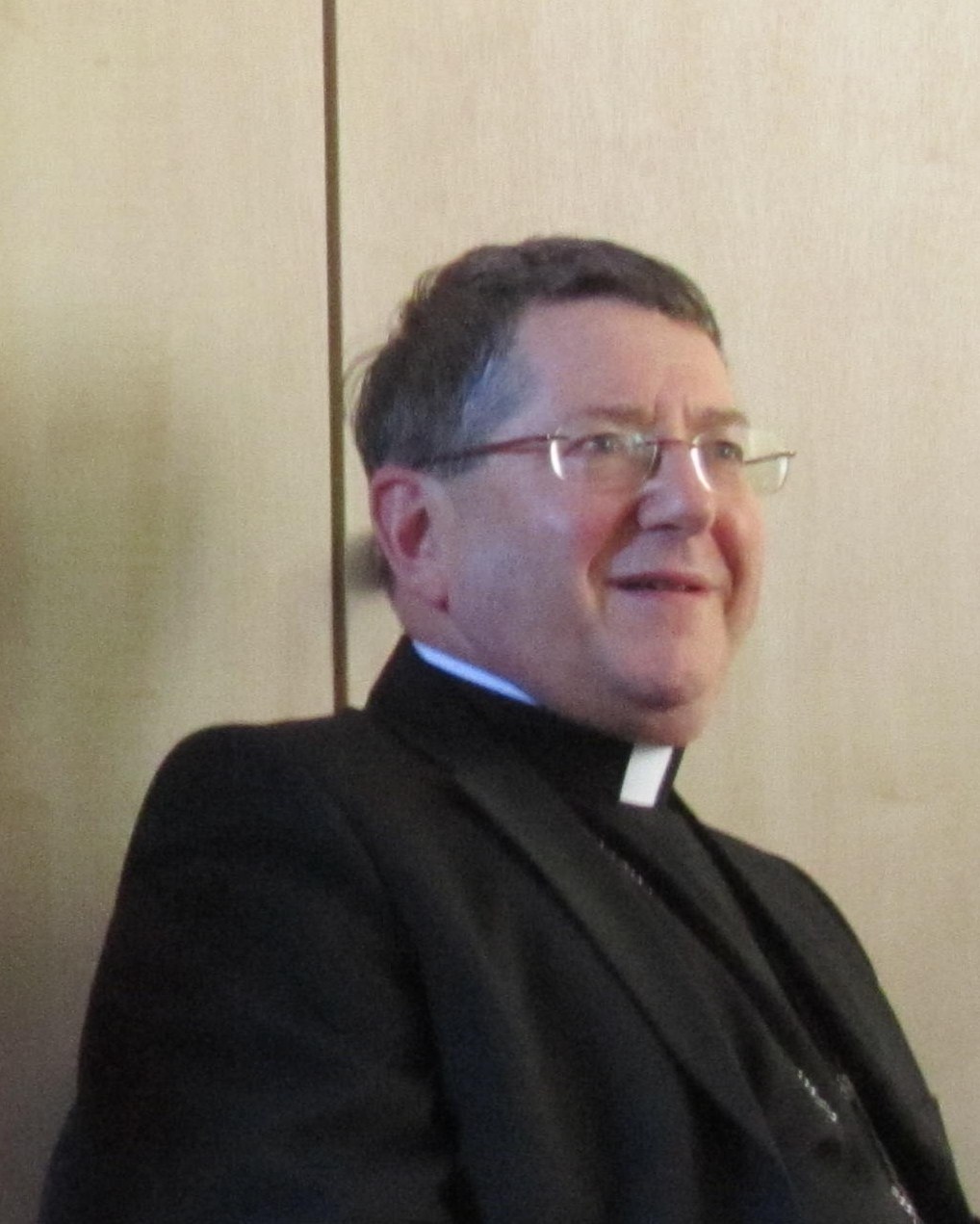
An extra hour in bed tonight, so time for a late night post. Just back from an amazing live telecast of Don Giovanni from the Met. Two days ago the entertainment was a little different - Mgr Andrew Wadsworth, genius of ICEL and the New Translation, speaking to a group of clergy at the Oratory School near Reading. We heard too from Bishop Mark Davies of Shrewsbury, and from the Australian part of the Confraternity of Catholic Clergy, Bishop Geoffrey Jarrett. You can see more about it on the Anglo Catholic and elsewhere, but it gave me a focus for this Sunday's sermon.


‘They do not practise what they preach.’ : a sermon preached at the Ordinariate Mass on Sunday October 30,at Our Lady Queen of Peace, Southbourne

Jesus challenges every priest with his words to the Pharisees in today’s Gospel. We have far better news to share than ever the Pharisees had. They taught the Old Testament law, we are entrusted with the Good News of Jesus Christ. But as the Gospel is better than the law, so the judgment on those who do not practise what they preach is so much the harder. And how can any priest live up to the words of Our Lord and Saviour Jesus Christ?

Very well, you could say, that is for you and for Fr Graham and Fr Gerry to worry about. You are the ones who must preach, and must practise what you preach. but what does it have to do with us? We don’t preach, we have only to listen. Well consider this. For two days last week a group of priests met at the Oratory School near Reading, to consider our vocation and the way we live it. We were challenged by the Bishop of Shrewsbury, Mgr Mark Davies. He reminded us of St Jean Marie Vianney, the Cure D’Ars. That humble faithful little priest, who spent his whole ministry in that remote desolate French village, was instrumental in renewing the whole life of the priesthood, not only in France but far beyond. He was not particularly gifted, no great orator, no scholar; but as St Paul reminds us, it is our failings and our weaknesses that God chooses to use. So when Fr Jean-Marie spoke about his poor self, he did not want us to think he was exaggerating. Bishop Mark recalled us to our first stirrings of vocation. The saints often write of their own first call. The bishop spoke of the priest who encouraged him to consider whether he might have a vocation – when he was just twelve years old. When first we hear God speaking, as the child Samuel heard him calling when he was sleeping in the Temple, it is always a call to love. “The priesthood”, said Bishop Mark, “is the love of the heart of Jesus”. We are constantly to stir up that love in us.

Now the People of God have a very active role in this recall to love and holiness. Since becoming a Catholic Priest, only a matter of months ago, the affection of lay people for their priests has touched me. In previous ministry people have sometimes expressed their thanks; but never as regularly as now. Say a mass at my local parish church, and invariably people will thank me for it. It is as though the Eucharist, the thanksgiving, naturally overflows; as we have been giving thanks to the Father, so thanks continue after Mass, and are addressed not only to God, but to his priest.

Which is, or should be, very humbling; for we are only doing what we must do; as Jesus teaches us, when we have done all we have to do, we are to say “I am an unprofitable servant”. There is huge encouragement from the people towards the priests. It is not just explicitly in words of thanks that this is conveyed. As Bishop Mark expressed it, “Penance has a pedagogical influence on the priest as confessor”. That too I knew in my Anglican days. There is great grace given in hearing confessions – and especially the confessions of the very old, and of the very young, can challenge us. Can we be as honest, as straightforward, as trusting, when we make our confession? The penitent becomes the teacher, and the confessor the one who is taught.
This is why the Gospel tells us today “You have only one Teacher, the Christ.” So we do; and it is through our encounters, especially with our fellow Christians, that he teaches us. Similarly, when people address us as “Father” we know this is only because of our priesthood, not from any great virtue in us. He permits his priests to act on his behalf, to stand in for him – only in this sense can we be “Father” to the people of God.

So it is interacting with the family of the Church that a priest begins to learn what it is to be a priest. That means that although Our Lord’s words are addressed today to the Preachers, they are meant for all of us. The laity can encourage, or shame, or nudge priests into becoming what they should be, by having very high expectations of us. You will, alas, be let down. Priests are frail earthen vessels and things of no worth; but still you must persist in praying for them, and showing just how high a calling they have. That above all, his calling is to imitate Christ – in his humility. For today’s Gospel ends with Jesus saying “Anyone who exalts himself will be humbled, and anyone who humbles himself will be exalted”.

The Parish Priest fulfils an Office; but the priesthood is the shared gift of the holy common people of God. ‘For you also’, says St Peter (I Pet. 2.5), ‘are built up as a spiritual house, a holy priesthood, to offer up spiritual sacrifices acceptable to God by Jesus Christ’. Certainly support your priests through your prayer; through your attendance at Mass, through your participation in the sacrament of reconciliation.


Fr Marcus and Fr Peter, two of the originators of the British Province of the Confraternity of Catholic Clergy.

Sunday, 23 October 2011

..Books in the Running Brooks...


Our little Ordinariate Group in Bournemouth is going through some teething troubles just now - so we would value your prayers, dear reader. We'll say more about this another time. Meanwhile, for a little refreshment, Jane and I walked across the Salterns. Salt was what made Lymington its money - real money in the 18th Century, in one year alone this local industry paid £40,000 in tax - at a time when £4 a year was a decent wage!


The saltmarshes are now a nature reserve, and there are just a few places where some of the old industrial buildings survive. They were used to boil the brine after the saltwater had evaporated in the saltpans - whose outlines are still traceable here and there. These barns are very ancient, and were probably used for storing salt before it was taken away on barges.


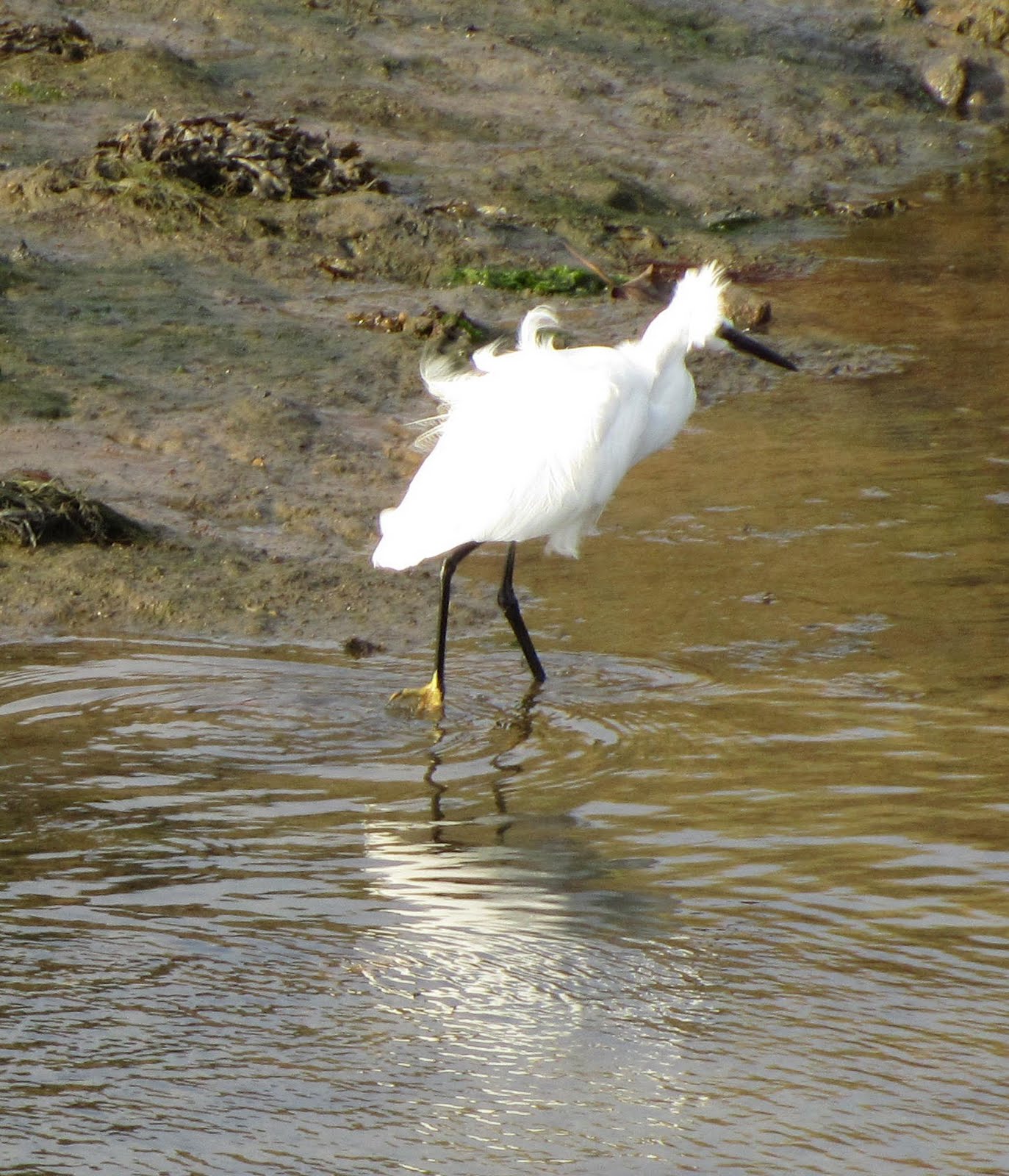
There were lapwings and curlews, and great flocks of geese - probably Canada geese, they were a little far off to identify them postively. There was also this elegant Little Egret. Only a few years ago they were great rarities; recently, we have seen thirteen in one day.

.
Today's bird was especially elegant.

Except when the wind blew to ruffle his feathers, when he looked more like a dishmop than the suave hunter of fishes.

I suppose we can all look a bit stupid when our feathers are ruffled. Then we need time to compose ourselves and put a brave face on the world once more.

And although they don't fit in with this piece of sermonising, here are some of the fruits of the forest;


acorns, so plentiful in the New Forest this year that the pigs are being turned loose for longer than usual to consume the pannage - if the pigs don't eat them the ponies will, and acorns are poison to horses. This little herd on the Salterns looked very excited in the windy conditions.


Whereas some stick-in the muds were quite unmoved.

Sunday, 16 October 2011

A Bit More Patrimony


Concerning Eikons - the picture above being from Eikon Basilike of Charles I.
Life has been busy; daily masses either in Lymington or with the Ordinariate, and my first Funeral Mass as a Catholic. So I am turning to that great stand-by of clergy bloggers, the sermon. Today's, preached for the Southbourne Ordinariate Mass, concerned Jesus' response to the Pharisees.


Whose head is this? Whose name? [MTT xxii.20, JB version]

We’ve heard a good deal about our Anglican Patrimony these last months; without ever discovering just what it includes. Surely one element is the desire to find out just what Scripture really says. Fortunately, those of us who have become Catholics in the past year have joined the Church just as she too is concerning herself with the real meaning of words. That is why the new translation of the Mass seeks to be much more accurate when it quotes the words of Holy Scripture; for instance “Behold the Lamb of God”, quoting John Baptist, rather than the old words “This is the Lamb of God”.

So far, in the readings from Scripture we are mostly using the Jerusalem Bible – but the Church has authorised other versions, and one, the Revised Standard Version, is usually far more accurate than the looser paraphrase that we hear read – this morning, for instance. Now often the differences don’t matter that much; but sometimes we miss something really important if we do not have an accurate translation of what Jesus said.

We heard him say today, holding up the denarius, “Whose head is this; whose name?” Sorry, that is not what the Greek of the New Testament says. He asks about the EIKON: and eikon does not mean “head” – the Greeks had a perfectly good word for “head”. No, EIKON means an image, a representation. It is a word which keeps coming up throughout the Bible.

In the law given to Moses, for instance, we’re not forbidden to make heads: we are forbidden to make images; in the Greek version of the Old Testament that word is EIKON. But there is an even more important place where the word is used – and even the Jerusalem Bible translates it properly there. In the very first book of the Bible, Genesis, we read how the Lord decided to create human beings; and he said, “Let us make man in our own image”. And, just as he had decided, “God created man in his own image: male and female created he them”.

So back to today’s Gospel. The Pharisees have been trying once again to trap Jesus; we have heard about the way they went about trying to trap him in the Gospels for the last few weeks. Now it’s ‘Is it right to pay tribute to Cesar or not?’ Say yes, and he will be branded a traitor to the Jewish people. Say no, and he will be reported to the Roman authorities as an agitator. Catch 22, you could say. So Jesus asks for a coin; not just any coin, but the one they paid their taxes with. Until the Roman invasion, the Jews had had their own coinage, and in obedience to the law of Moses, those coins did not have any human face depicted on them. The Romans were having none of that second-rate stuff; only good Roman money would suit them, so the taxes had to be paid in Roman coins … which to a good Jew would seem blasphemous, with its picture of the Emperor. They hand Jesus a denarius. Whose head is this, he asks; no, he doesn’t, he asks WHOSE EIKON, whose image is this? Whose name is here, he asks? Well, no he doesn’t, not exactly; he asks whose EPIGRAPH, whose WRITING, whose SIGNATURE is on the coin?

'Caesar’s', they answer. 'Very well then, give back to Caesar what is Caesar’s; and to God what is God’s.' Fine, that means we have to pay our taxes. But what about God: what are our dues to Him?

Look round you. Whose IMAGE, whose LIKENESS do you see? On the coin there is just one face: around us are many faces – the faces of our fellow human beings. In the image of God made he them; male and female created he them. Each of us carries God’s likeness, not in our pocket on a coin, but on our faces. And what inscription, what signature, appears there? Well of course when we were Baptized we were given a signature; we were signed with the Cross. That is the epigraph, the signature, on us.

So if we take the Bible seriously, and try to discover what it really says, we will find many connections like this, links between the New Testament and the Old, which will enlighten our understanding. We think we know the Bible so well. To be honest, we can even get a little bored hearing the same stories time and again. But if only we will work at them, seek out the connections, discover the echoes from one Book of Scripture to another, we shall constantly find new treasures. And Jesus tells us that the wise house-holder is the one who brings out of his treasures things old and new. This does not mean that each of us needs to learn Biblical Greek to understand; all we need is a good version of the Bible, preferably two or three, to compare them; if your Bible has footnotes and references, so much the better. Look them up, and follow the links.

So - just a coin; we handle them every day. The one Jesus took to show the crowd, though, taught us more than we supposed. Render to Caesar the things that are Caesar’s – pay your taxes, even while you grumble about it. But render to God what belongs to him - and what is that? It is us, made in his image, our bodies designed to be temples of the Holy Spirit – here we offer and present ourselves, our souls and bodies, to be a reasonable, holy and living sacrifice…. That is from the Anglican prayer book, part of our patrimony; and it echoes Our Lord in today’s gospel; render to God the things that are God’s. So often we judge people by their wealth; the image of Caesar in their pockets and their bank accounts. Far more important, how they care for the image in which they are made – the image of God himself, the image we shall offer back to him at the last.

Friday, 7 October 2011

Mary & the Patrimony


Our Lady of the Rosary at St Anne's Brockenhurst - what could former Anglicans add to that from our Patrimony? A church dedicated to the Mother of the Lord, and a Mass of Our Lady. Well, at the end of this morning's Mass I began singing the Angelus; and found I was operating solo. It was a great surprise to me that the tone I supposed everyone knew was unfamiliar to a Catholic congregation. They were very kind, though, and even said they would like to learn it! This just confirmed a conversation I'd had a few days ago. 'We thought', said this cradle Catholic, 'that the Church of England disliked such Roman things as "praying to the Virgin Mary" - yet we find you are far more Marian that we are!' The truth is, Anglo-Catholics have had to fight for a proper place to be given to the Mother of Our Lord - and in doing so we have probably become 'more Catholic than the Pope'. Now that we are in Communion with the Holy Father, we no longer have to fight in that way.

But it is still surprising to find that part of the patrimony we are bringing with us is devotion to Our Lady. At our Ordinariate Mass on Sundays in Southbourne we end by singing the Angelus - and again, those who join us from the Parish congregation seem delighted that we are using something which once was so familiar to them, but has largely been neglected in recent years.

I believe Our Lady has a great concern for the Ordinariate. The first of them here in England is dedicated to her under the title of Our Lady of Walsingham. For me, the process began years back, when we started the Ecumenical Friends of Fatima (EFFA), and I was asked to lead Pilgrimages there. At the end of the Procession on May 13th the Bishop of Leiria/Fatima generally calls four or five bishops forward. The crown is removed from the Image of Our Lady, and these bishops are invited to touch the Spina, the bullet set in the top of the crown. On our first visit it was intensely moving that Bishop Seraphim included me, an Anglican bishop, in that little group. The bullet was the one which had so nearly killed the Holy Father; that attack had happened on May 13th, the anniversary of the first apparition of Our Lady in Fatima. In thanksgiving, the Pope gave the bullet to the shrine. It might seem a curious gift, but Mary's protection was something John Paul II valued hugely.

In all her conversations with the Little Shepherds, Our Lady emphasised the importance of praying the Rosary. Our Anglican Group, EFFA, has taken this call to prayer very seriously, and each day our seventy or so members pray one of the Mysteries in turn, asking Our Lady's prayers for others in the Association. Those prayers are still being answered. So far, thirty of us have come into Communion with the see of Rome. Perhaps part of our Patrrimony involves reminding our fellow Catholics that Mary is mother of us all, and calls us all to prayer with her.

Saturday, 1 October 2011

Portsea

Was it cheek or ignorance which led an Ordinand to ask "Father, did you know Father Dolling?" Since that great hero of the faith had died a third of a century before I was born, I did not immediately take it as a compliment. Yet it is true that I sometimes went on a little about Robert Dolling's work in Portsea. One of my home Communicants had been prepared for Confirmation by him, so I did feel a real link with this Portsmouoth legend. So many St Stephen's House ordinands came from London parishes and knew nothing of Anglo-Catholicism in the provinces. Yet Portsea was a slum every bit as much as London Docks or Pimlico, and Dolling's heroic work was still remembered sixty years later during the time of my second curacy (and another home Communicant threw me when she said her Grandfather had been a drummer boy at the Battle of Waterloo!)


Today was a great delight. Thanks to the generosity of Fr Maunder, who looks after St Agatha's and ministers there to a TAC congregation, the local Ordinariate Group was able to celebrate mass in that amazing building. I shall say a little more about it on the Anglo-Catholic blog, but thought my faithful readers must not be denied some report of today's event. Fr Jonathan Redvers-Harris ministers to a Group on the Isle of Wight, besides a handful of loyal Ordinarians on the mainland of Portsmouth. His is the next group along the coast from ours in Bournemouth; the third group in Portsmouth Diocese is Fr Elliott's in Reading. On the hottest October day on record we were joined by a few of the TAC congregation, together with Fr Maunder and Bishop Robert Mercer C.R. How we hope that their application to join the Ordinariate will be able to be expedited in Rome.


After Mass we sat in the ruined splendours of the vandalised South (Lady) Chapel - partly demolished after the Dockyard expansion scheme had engulfed St Agatha's, and new roads were constructed as the old slums (the few spared by German bombing) were cleared away. There we ate lunch, met some new friends, and looked forward to even great glory days when the Ordinariate is growing and flourishing. Fr Maunder (second from right above) has done heroic work in restoring St Agatha's, and the Lady Chapel is on his list whenever funds become available.
The need for Catholic mission is no less than in Fr Dolling's day, but the evils we combat are not the obvious ones of prostitution and drunkenness - rather the smug forgetfulness of God as we become more overtaken by the creed of acquisitiveness and 'rights'.
It was good to be joined by Fr Jonathan's parish priest in Ryde, Fr Anthony Glaysher (caught drinking tea in photo above), who is such a support to the Ordinariate Group.

Thursday, 29 September 2011

Another Step for the Ordinariate


We country cousins have to ask our metropolitan friends to help us when we have an overnight stay in London. It was noble of Fr Rob Page to give hospitality to Jane and me this week, on the very eve of his move to the new parish. So (above) you will see our genial host, contemplating moving from his spacious Vicargae kitchen into something rather smaller in his Presbytery. Our overnight stay though was only one instance of the logistics of organising meetings for all the priests of the Ordinariate.

Getting fifty and more priests together from the corners of the Realm is an expensive business; just one of the many worries besetting our Ordinary. Mgr Keith's sunny demeanour, though, (here he is on the left) betrayed none of his financial worries when he welcomed Cardinal Levada today. The Cardinal, hot-foot from the enthronement of the Patriarch of Milan, spent two days in England first encouraging the newly former Friends of the Ordinariate, and then today, encouraging the Ordinariate's priests.


For many months now we newly ordained priests have been instructed in various aspects of the Faith at the Seminary of Allen Hall. Today Cardinal Levada addressed us about the hopes of the Holy Father for the Ordinariate. We have known in theory that Anglicanorum Coetibus was Pope Benedict's special concern, indeed very largely of his own devising. Now we are reassured by His Eminence's visit that what we are engaged in is very dear to the Pope's heart. The Cardinal generously answered questions (some of which are at present unanswerable - only time will produce the solution). Most of all, he showed us the caring face of the Catholic Church, and the warmth of his address to us gave many of us new heart.

(Click on this picture to see the Cardinal & Mgr Newton, right at the back of this group)
The Cardinal's visit was important for the life of Allen Hall - as a former theological college Principal I know how important such occasions can be - and it was good to see Cardinal Levada greeting so many of the seminarians individually. For us of the Ordinariate, it was a huge privilege to be able to celebrate Michaelmass with the man who, after Pope Benedict, has done most to further the Ordinariate not only in England but across the world. Having him with us at this time will surely enliven our prayers, and spur us on to make the Ordinariate an instrument of Unity and Evangelisation which the Holy Father wants us to become.

Sunday, 11 September 2011

Bella Italia


Villa La Rotonda by Palladio (and copied at Chiswick)

Seven days, to see Vicenza, Padua, Venice and Verona! Madness... but it was lovely. Until visiting the Scrovegni Chapel in Padua (aka the Arena Chapel) I had never quite seen why Giotto was reckoned so outstanding. The Frescoes in Assisi are all very well, but they do not have the impact that the Padua frescoes make. They are such a coherent story, from Old Testament to New, from the Nativity of the Virgin to the Life of Christ. Such pathos in the faces of the weeping women - never before captured in paint. How Giotto's contemporaries must have been astounded - art could not be the same again.


So Padua was one highlight. In Vicenza, the attraction was the star among architects, Andrea Palladio. We see him second-hand in England, first through Inigo Jones - that 'finest barn', St Paul's Covent Garden; and the Queen's House in Greenwich, the Banqueting Hall in Whitehall, followed by a thousand imitators in the next three centuries. Even now, in the polite watered-down classicism of Brentwood Cathedral (archt Quinlan Terry, beloved of the Prince of Wales) there are the faintest echoes of Palladio. But the real thing is just knock-out.


In Italy, though, it is often the unexpected that manages to bowl you over. I had never heard of the Church of Santa Anastasia in Verona; yet it is an absolute wonder - here is just a detail of the ceiling decoration.


To say nothing of being able to pray at the tomb of St Antony (of Padua, as they call him in Italy; but in his homeland, Portugal, he is Antony of Lisbon). And devotion to Our Lady results in some magnificent, florid, loveable images of the Virgin.


Speaking of the unexpected, we hit Vicenza on the night of a great Parade celebrating the Rua. No, I'd not heard of it either. It is, in effect, a wonderful fairground ride. Painted in outlandish colours, it probably represents the sort of impact our mediaeval cathedrals would once have made (think the West Front of Exeter or Wells, Salisbury or Lincoln, all done in these colours - as originally they were). Fortunately Italy is not overwhelmed by 'good taste'; so the Rua is magnificently OTT, daring to stand as it does before two of the great works of Palladio.


What fun it must be, to be Italian! Perhaps that is what the Ordinariate is seeking - a bit of vulgarity in our religion.

Click on some of these images, please, to see a larger version.